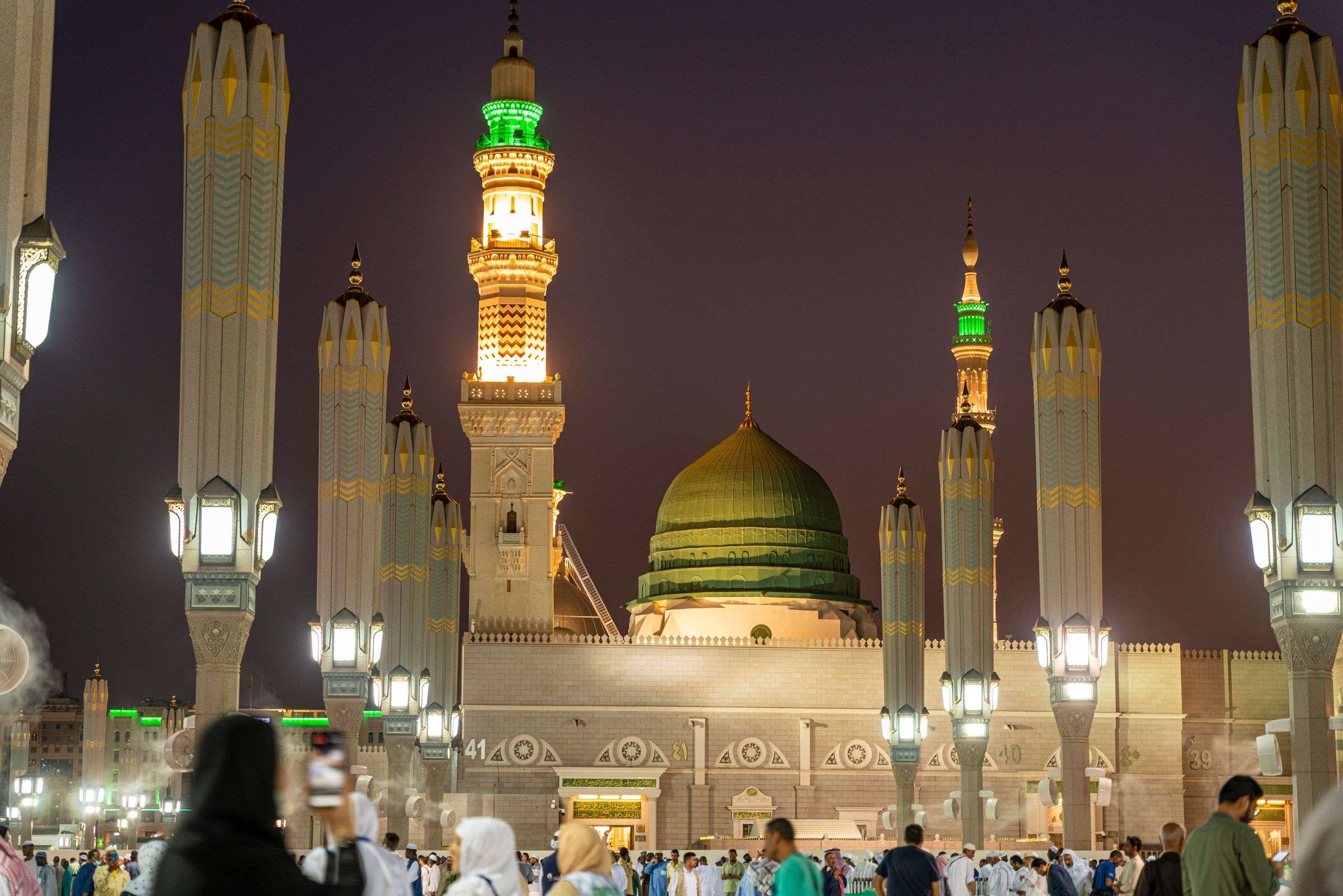
Umrah in four steps
- 1Ihram: put on Ihram before the Miqat, make the intention and recite the Talbiyah.
- 2Tawaf: seven circuits of the Kaaba starting from the Black Stone, then two rak'ahs.
- 3Sa'i: seven laps between Safa and Marwah.
- 4Halq or Taqsir: men shave or trim the hair; women trim a little from the ends.
Once in Makkah, the whole Umrah usually takes three to four hours, depending on the crowds.
What is fard and what is wajib (Hanafi school)
| Part | Ruling |
|---|---|
| Ihram | Condition (shart); no Umrah without it |
| The first four circuits of Tawaf | Pillar (rukn, fard) |
| The remaining three circuits | Wajib |
| Sa'i between Safa and Marwah | Wajib |
| Halq or Taqsir | Wajib |
| Tawaf in wudu with the awrah covered, outside the Hatim; two rak'ahs after Tawaf | Wajib |
Leaving a wajib without a valid excuse requires a dam: a sheep or goat sacrificed within the Haram.
References: al-Kasani, Bada'i al-Sana'i; al-Marghinani, al-Hidayah
Is Umrah obligatory?
Allah says, “Complete the Hajj and Umrah for Allah” (Surah al-Baqarah 2:196). The relied-on Hanafi view is that Umrah is a confirmed sunnah (sunnah mu'akkadah) once in a lifetime for those who can afford it.
In the Hanafi school, starting an Umrah is disliked (makruh) on the Day of Arafah, the Day of Sacrifice and the three days after it (9–13 Dhul-Hijjah).
The virtues of Umrah
- One Umrah to the next is an expiation for the sins between them (Sahih al-Bukhari 1773).
- An Umrah in Ramadan equals a Hajj in reward — in one narration, “a Hajj with me” (Sahih al-Bukhari 1782, 1863; Sahih Muslim 1256). It does not replace the obligatory Hajj.
A scholar's review is in progress. If you are unsure about a ruling in your own case, ask a scholar.